What are the Best Backpacking Boots [Free Download – Backpacking 10 Essentials Checklist]
Apparel, Backpacking, Gear
Find the best backpacking boots for your next adventure. Learn what to look for in fit, support, traction, and durability—so your boots can handle any trail you take on.
Let’s face it, your backpacking boots, shoes, trailrunners, whatever you wear are going to make of break your backpacking trip. No other piece of gear is used and abused as much as your footwear. Every mile tests your gear—and your grit. The best boots keep your feet dry, steady, and blister-free when the trail turns rough. They grip when the rocks get slick, cushion when the pack gets heavy, and protect when the terrain bites back.
What are the Best Backpacking Boots?
When people ask me as a guide, “What are the best backpacking boots?” I answer with a wry smile and say, “It depends.” It depends on where you’re hiking, the season, and how you move through the backcountry. After decades of guiding trips and logging countless miles, most of them east of the Mississippi, I’ve learned that “best” rarely means “most.” “Most waterproof,” “most expensive,” “most grippy,” or “most popular.” In fact, for the kind of terrain most of us will hike—rolling forests, humid valleys, rocky or sandy, but well-maintained trails—the right footwear often looks a little different than what most folks expect.
In fact, the best backpacking boots might not be boots at all. They might be trail runners or trail shoes, but the principles for picking boots apply to hiking shoes and trail runners, too. Whatever you decide works for you, choose wisely, and your boots will have your back every step of the way.
Let’s break it down.
The Best Backpacking Boots Might Not Be Waterproof
Best Backpacking Boots 2 Photo by Clay Banks on Unsplash
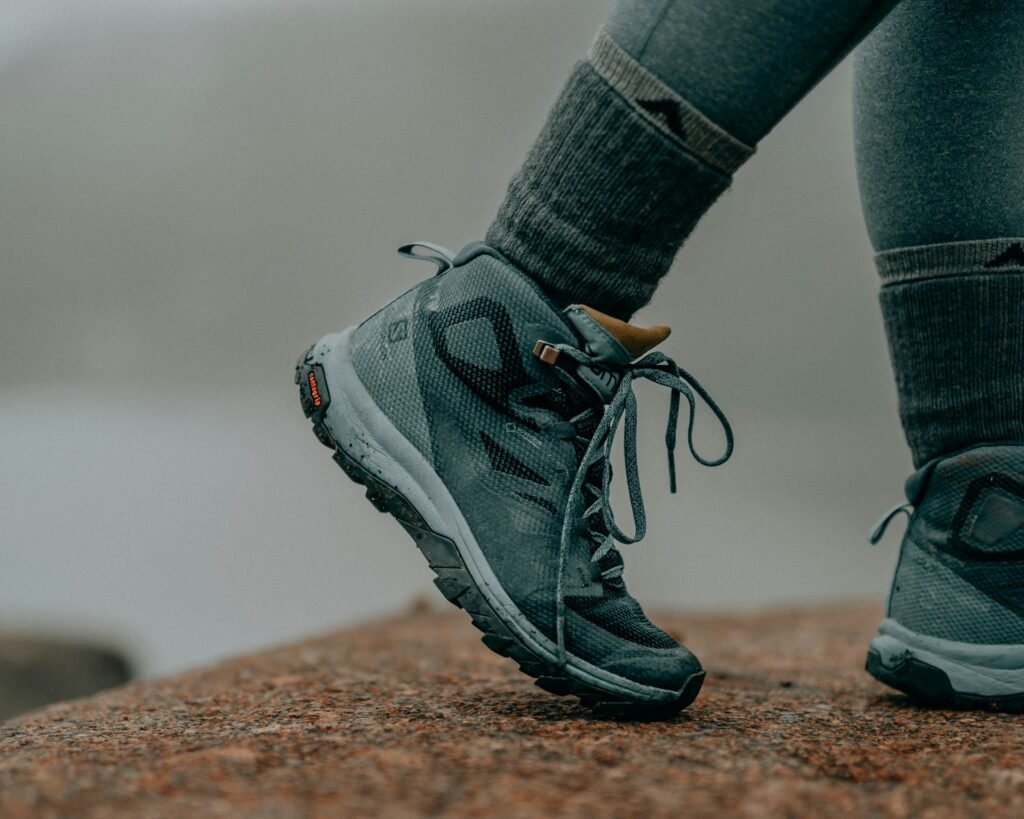
Let’s face it, most of us are weekend warriors who will backpack in spring, summer, and fall, when humidity hangs thick and afternoon storms are common. That means one thing—our boots will get wet, in spite of our best intentions. Whether it’s stream crossings, soggy leaf litter, or rain blowing sideways, moisture will find its way into our footwear.
That’s why I reach for mesh uppers instead of waterproof Gore-Tex boots. Here’s the truth: waterproof boots aren’t truly waterproof for long. Once water finds its way inside, that fancy membrane just traps it there. Your boots turn into little swimming pools that never dry out.
Mesh uppers, on the other hand, breathe and drain. Water goes in, water comes out, and your feet can start drying within minutes instead of days. Assuming you’re wearing the right socks—mine are always merino wool, since they retain insulation even when wet—you’ll be comfortable, even in damp conditions.
Waterproofing sounds good in theory, but when you spend your days wading creeks or tromping through wet brush, you learn that it’s better to let your boots breathe than to seal them up like Tupperware.
Essential Backpacking and Wilderness Survival Gear
Here’s a great article comparing Hiking Shoes and Hiking Boots.
But, What is the Best Backpacking Boot for Cold Weather?
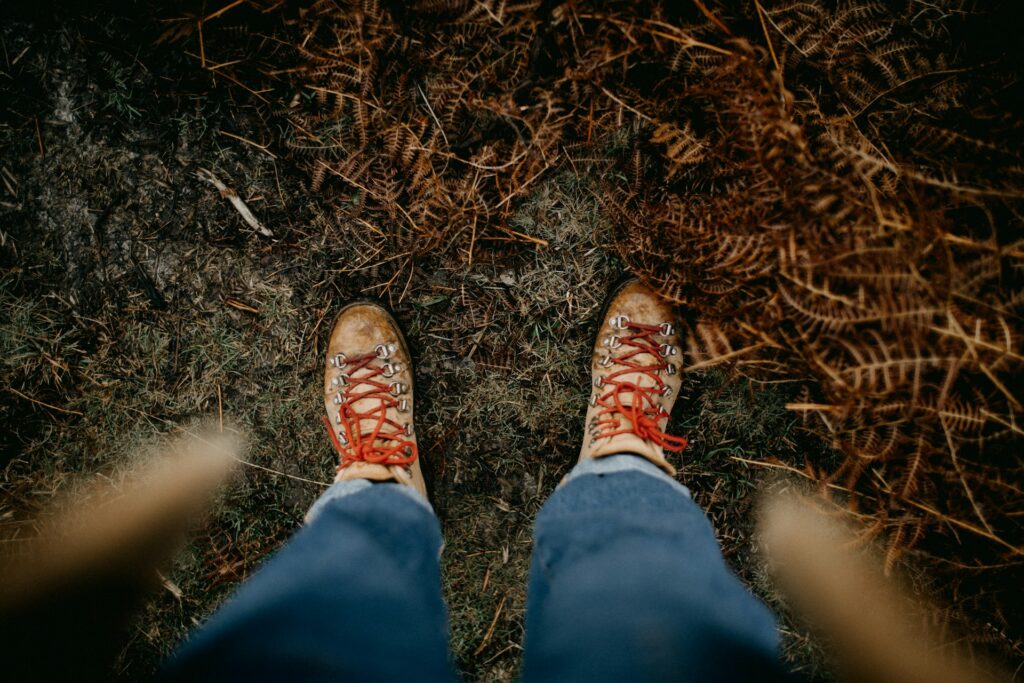
That’s a distinctly different story, er…blogpost that will come later, but in short, my mesh philosophy breaks down in true cold-weather hiking. Once temperatures drop below freezing, wet feet can turn dangerous. In winter conditions, I switch to insulated, waterproof boots to trap warmth and prevent frostbite. They’re probably going to be leather and look like boots from back in the day.
But for the majority of the year mesh is king. If you’re new to backpacking or guiding beginners, I’d argue this approach—embracing wet, breathable, mesh boots, instead of fighting the inevitable—is the single biggest comfort upgrade you can make.
Trail Runners Might Actually Be the Best Backpacking Boots

Now, let’s tackle another big question in the world of backcountry footwear: boots or trail runners? I lean toward trail runners or lightweight hiking shoes.
Here’s why: boots tend to lock your ankles in place. That sounds like a good thing—until it isn’t. When you stumble (and everyone does eventually), that rigid ankle support transfers torque and twist up to your knee, which is far more delicate and harder to recover from. Ankles are built to move and flex. Knees, not so much.
I’d rather deal with a rolled ankle than a torn knee any day. A mild ankle sprain can often be walked off after a break. A knee injury in the backcountry? That’s how even the toughest hikers end up hitting the SOS button on their InReach.
So while boots might seem like they offer more protection, flexibility and agility often win the day. Your body’s natural movement is the best shock absorber you’ve got.
The exception to this when traversing rocky terrain, like Rocksylvania or New Hampshire and Maine on the Appalachian Trail. Mid-high boots provide protection against ankle-knockers.
What’s About the Tread?
The tread on your hiking boots is your foundation when the trail turns wild. It keeps you upright when the rocks are slick, the roots are wet, and the mud’s trying to swallow your boots whole. Hard, deep, aggressive lugs dig in and hold fast when the ground gets sloppy. However, they can be rough on the environment by exacerbating erosion on soft trails. Tighter, low-profile lugs grip better on dry, rocky ridgelines and while scrambling. A good tread sheds mud, channels water, and gives you confidence when the weather or terrain starts to fight back. When you’re miles from the truck, that’s not just comfort—it’s survival.
But tread isn’t just about traction—it’s about trust. The right rubber compound holds up to long, punishing miles and keeps you steady when fatigue sets in. When your boots bite into the earth just right, your stride feels sure and balanced, like your body and the trail are working together instead of against each other. Out here, where every step matters, your tread is your handshake with the ground beneath you. Choose it wisely—it’s what keeps you moving when everything else wants to slow you down.
What’s the Best Backpacking Boot I Keep Coming Back To:
Merrell Moab Mid
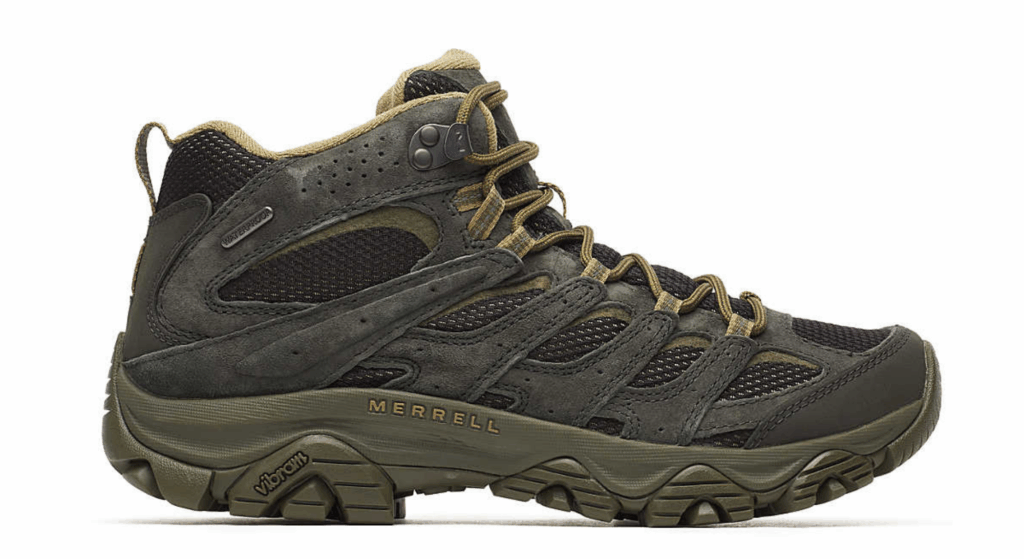
Yes, the Moab is popular, almost ubiquitous. And yes, I know that I said the best backpacking boot might not be the most popular, but in my defense I said “might.” Sometimes things are popular because they’re pretty good.
If you peeked into my gear closet right now, you’d find multiple pairs of Merrell Moabs—both shoes and mid boots. I’ve had a pair of Moabs in rotation for over 25 years, and I keep coming back for one reason: they just work.
For trails east of the Mississippi—yes, even the rugged White Mountains of New Hampshire—the Merrell Moab hits the sweet spot of comfort, traction, and reliability. It’s the boot I recommend to 90% of our beginner backpacking guests.
Here’s why I love them:
- Comfort: They feel like bedroom slippers. Seriously. The cushioning and fit are unmatched for the price.
- Zero Break-In: My golden rule of hiking boots—if you can’t wear them straight out of the box on a real trail, put them back on the shelf. The Moabs pass that test every time.
- Affordability: I own high-end boots that cost twice as much, but 90% of the time, it’s the Moabs on my feet—on the trail, in camp, or even around town.
If you’re curious, you can check them out here:
👉 Merrell Moab 3 Mid
The Best Backpacking “Boots” for Going Light and Fast:
The Merrell Moab Speed
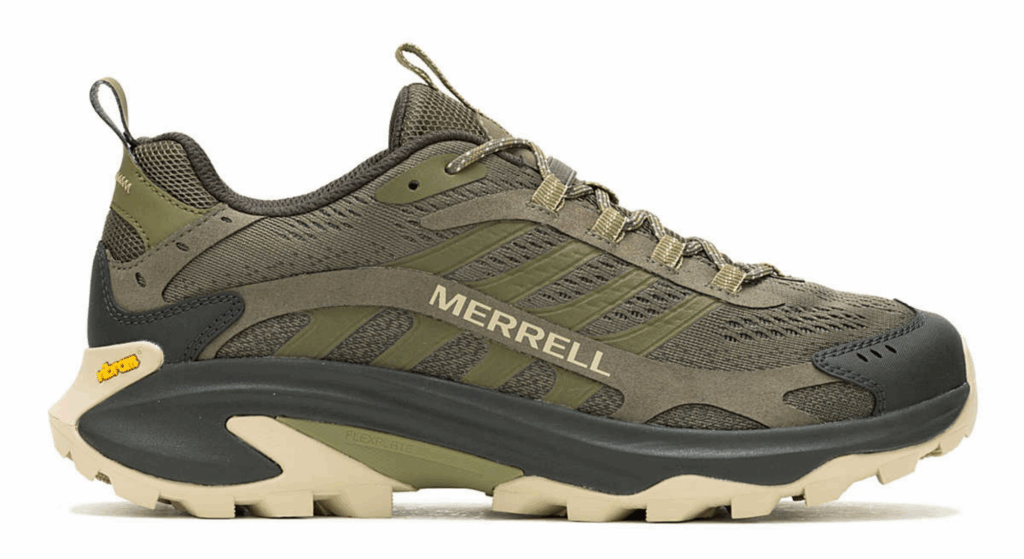
OK, have I established that I’m a Merrell fanboy? Sue me.
A few years ago I added the Merrell Moab Speed to my trail footwear lineup, and it’s quickly become my favorite for covering miles fast. These are designed for hikers who want that “fast and light” feel without sacrificing stability.
Trail runners have exploded in popularity among long-distance and thru-hikers for good reason—they’re light, breathable, and dry quickly. I’ve tackled big New England routes like the Presidential Traverse, Franconia Ridge, and Pemigewasset Loop in my Moab Speeds, and I never once missed my boots.
For me, that says everything.
👉 Merrell Moab Speed 2
What are The Best Backpacking Boots with More Toe Room?
Try Keen Targhee
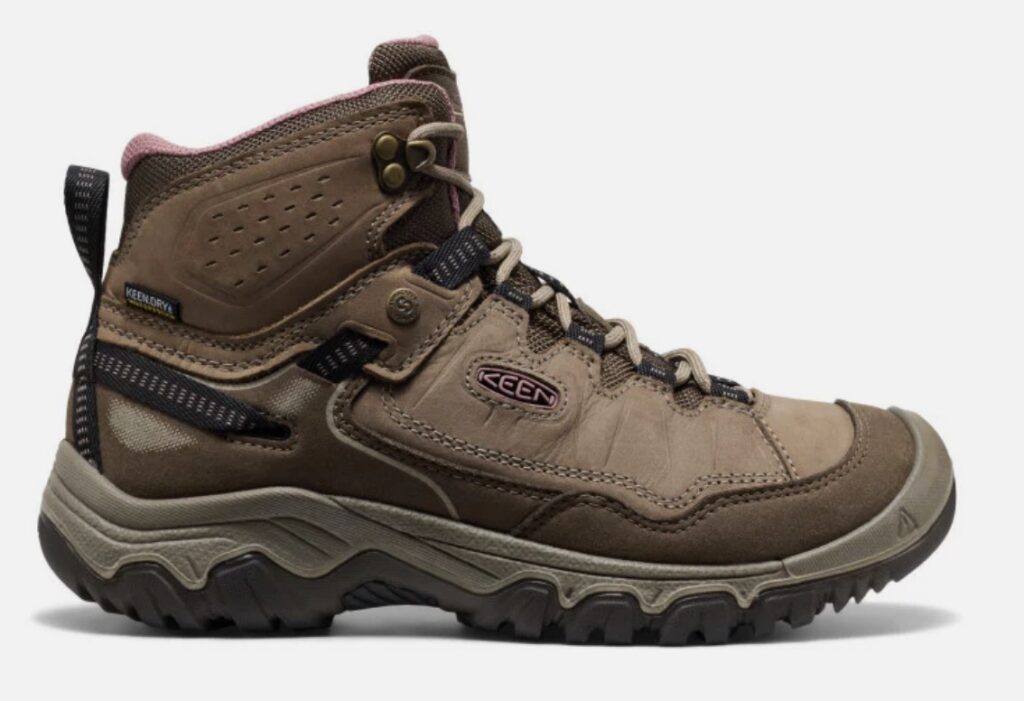
Another favorite in my rotation is the Keen Targhee line. These are fantastic for hikers who need a little more room in the toe box or tend to stub their toes on rocky terrain. The oversized “toe guard” on the Targhees is a blessing for anyone hiking rough, rooty, rocky trails.
And that oversized toe guard makes them ugly enough to be cool.
Just like the Moabs, they’re comfortable right out of the box and come in both low-cut and mid-height versions. If your feet feel cramped in other hiking shoes, give Keens a try—you’ll thank me later.
What are The Best [Waterproof-ish] Backpacking Boots
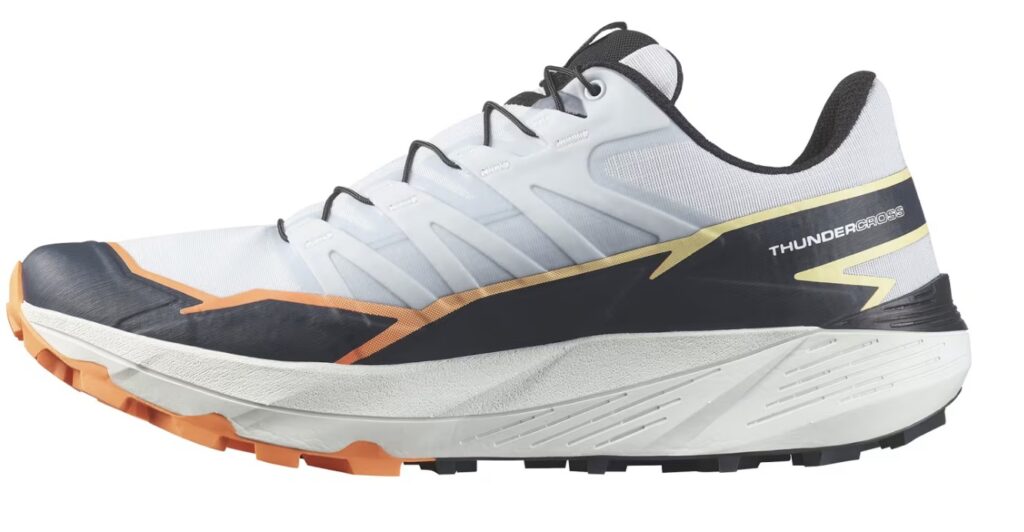
Yes, I do have some waterproof[ish] boots and trail runners. The Moabs come in GTX (Gore-tex) and I own some, but those aren’t what I reach for first. My go-to waterproofs are the Salomon Ultra-X Pioneer Mid and the Salomon Thundercross trail runner.
I confess that my love for them is mostly cosmetic: Salomon gear just looks funky (Thundercross) and bad-a$$ (Ultra-X Pioneer). I mainly wear them for our wilderness survival courses, rather than high mileage treks, but they meet all the criteria for good backpacking footwear.
Also, I have a friend who has trouble with Merrells and his arch. He swears by Salomons.
So, What Are the Best Backpacking Boots?
If you’re still wondering “what are the best backpacking boots?” here’s my honest answer:
The best boots are the ones that fit your feet, your environment, your terrain, and your hiking style. They’re the ones you like and are fun to wear. Let’s face it: If you don’t like to wear them and have a good time on the trail, then you’re not going to get out into the woods, and that’s the whole point.
For most hikers, that means:
- Mesh uppers over waterproof membranes (because wet boots dry faster than “waterproof” ones).
- Trail runners or low-cut shoes unless you’re in truly rugged, ankle-breaking terrain.
- A perfect fit that keeps your feet happy mile after mile.
- Trusted, proven models like the Merrell Moab or Keen Targhee that combine comfort, durability, and affordability.
How to Fit the Best Backpacking Boots the Right Way
Even the best backpacking boots in the world won’t do you any good if they don’t fit right. A poor fit leads to blisters, black toenails, sore arches, and long, miserable miles. Getting your fit dialed in is worth every bit of effort.
Here’s how I recommend fitting your boots or trail shoes:
- Try boots on at the end of the day. Your feet swell as you hike—sometimes a half-size or more. Trying them on after walking around or in the evening gives a truer fit.
- Wear your hiking socks. The thickness of your socks changes how boots feel. If you wear merino wool on the trail (like I do), wear them when you’re trying on boots.
- Check toe room. You should have about a thumb’s width of space in front of your toes when standing. On steep descents, your toes shouldn’t hit the front.
- Heel lock is key. Your heel should stay snug when you walk uphill. If it slides up and down, you’ll end up with blisters fast.
- Mind the width. Wide feet need room to breathe—brands like Keen offer generous toe boxes, while Merrells tend to fit a bit more snugly.
- Test them on an incline. If your local gear shop has a ramp or angled surface, use it. Walk up and down. Feel for slipping, tightness, or pressure points.
- No break-in, no problem. Modern boots like the Merrell Moab shouldn’t require weeks of break-in. If they feel wrong out of the box, move on.
A proper fit isn’t just about comfort—it’s about safety. Blisters can end a trip faster than a thunderstorm, and a poorly fitted boot can alter your gait and strain your knees or hips over long miles. When in doubt, size up slightly and adjust with thicker socks or an aftermarket insole.
In the end, your boots are just a tool—what matters most is how you move, how you care for your feet, and how much fun you’re having out there. The right pair should disappear on your feet, letting you focus on the view, the trail, and the adventure ahead.
So lace up, step out, and find what works best for you. After all, the best backpacking boots aren’t the ones that stay clean—they’re the ones that get you dirty and take you the farthest.
Here’s a Backpacker Magazine article on Backpacking Boots and Trail Runners